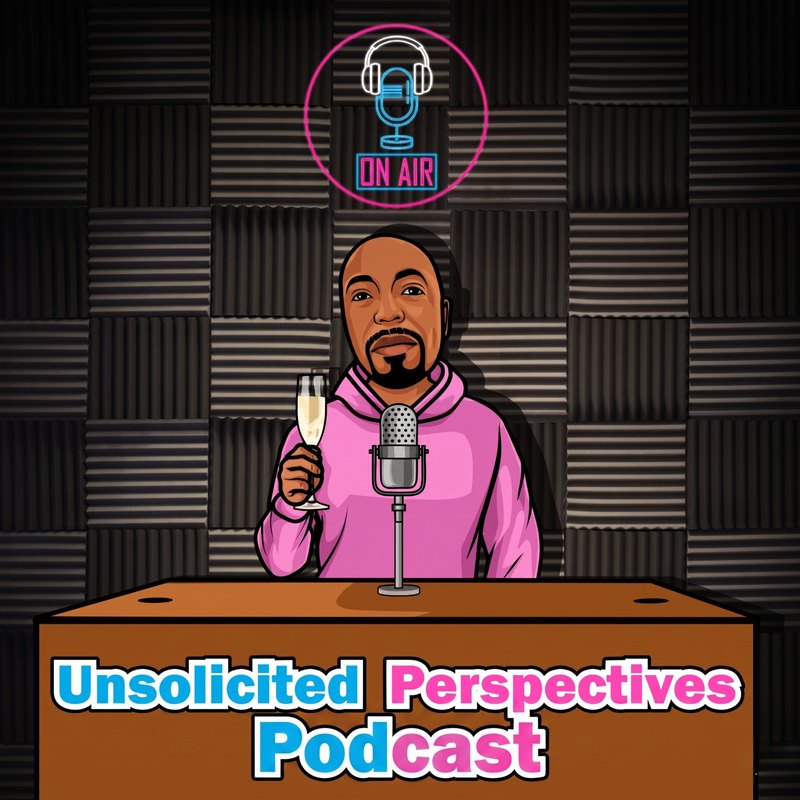
Passport Bros, Toxic Jobs & Why Women Are Done
Summary
Ever been hit on during a customer service interaction? 💼 Struggling with Sunday scaries at a job you hate? Bruce Anthony and J. Aundrea dive into customer service disasters, quitting toxic jobs, and the viral "Passport Bros" trend where men seek "traditional" partners abroad. From cringe-worthy lawn guy stories to gender role debates, this episode unpacks why modern work and dating feel broken. Learn when to quit your job, avoid awkward workplace flirting, and why women are done with lazy partners. Perfect for anyone craving real talk about career burnout, dating dynamics, and societal shifts. #podcast #PassportBros #QuitYourJob #CustomerServiceDisasters #genderdynamics #WorkplaceBurnout #unsolicitedperspectives
🔔 Hit that subscribe and notification button for weekly content that bridges the past to the future with passion and perspective. Thumbs up if we’re hitting the right notes! Let’s get the conversation rolling—drop a comment and let’s chat about today’s topics.
For the real deal, uncensored and all, swing by our Patreon at patreon.com/unsolicitedperspectives for exclusive episodes and more.
Thank you for tuning into Unsolicited Perspectives with Bruce Anthony. Let's continue the conversation in the comments and remember, stay engaged, stay informed, and always keep an open mind. See you in the next episode!
#podcast #mentalhealth #relationships #currentevents #popculture #fyp #trending #SocialCommentary
Chapters:
00:00 Welcome to Unsolicited Perspectives 🎙️🔥💥
00:45 Sibling Happy Hour: Spicy Takes & Drinks 🍹🌶️
01:47 Customer Service Disasters 😱💼🔥
04:51 Cringe-Worthy Encounters: Awkward Misfires & Mixed Signals 🤦♀️💬
13:34 Sips & Secrets: A Wine and Cheese Soirée 🍷🧀
22:13 Break Free: Spotting the Signs It’s Time to Quit Your Job 🚪💥
26:47 Rebelling Against Toxic Bosses ✊📢💥
27:32 Top Reasons to Say ‘I’m Done’: When It’s Time to Walk Away 👋💼
28:05 Burnt Out? You’re Not Alone 😴🔥💼
31:10 Sundays of Gloom: Conquering the Job Dread & Scaries 😨🌅
36:46 Money vs. Happiness: The Paycheck Trap 💰😔⚖️
39:37 Stuck in a Rut? Breaking Free from Limited Growth 🚀📉
41:46 Redefining Success: Creating Your Own Winning Formula 🌟💪
45:16 Passport Bros & Global Escapes: Rethinking Love & Tradition 🌍✈️
46:20 Modern Balance: Rethinking Gender Roles at Home 🏠⚖️
51:49 Respect is Key: Building Relationships on Mutual Ground 💑🤝
01:01:17 Final Flourish: Wrap-Up, Mic Drops & Last Thoughts 🎤🔚
Follow the Audio Podcast:
Apple Podcast: https://podcasts.apple.com/us/podcast/unsolicited-perspectives/id1653664166?mt=2&ls=1
Spotify: https://open.spotify.com/show/32BCYx7YltZYsW9gTe9dtd
www.unsolictedperspectives.com
Beat Provided By https://freebeats.io
Produced By White Hot
Transcript
Read the full transcript
Bruce Anthony: [00:00:00] We’re talking your job and dating. More specifically Passport bros. Let’s get it.
Bruce Anthony: [00:00:17] Welcome, first of all, welcome. This is Unsolicited Perspectives. I’m your host, Bruce Anthony. Here to lead the conversation in important events and topics that are shaping today’s society. Join the conversation or follow us wherever you get your audio podcast. Subscribe to our YouTube channel for our video podcast and YouTube exclusive content rate review.
Bruce Anthony: [00:00:36] Like, comment, share, share with your friends, share with your family. Hell even share with your enemies. On today’s episode,
Bruce Anthony: [00:00:45] it’s the sibling happy hour. I’m here with my sis, Jay. Andrea. We gonna be dilly ding a little bit, and then we’re gonna be talking about should you quit your job. And then we’re gonna be talking about relationships and gender dynamics.
Bruce Anthony: [00:00:56] But that’s enough of the intro. Let’s get to the show.
Bruce Anthony: [00:01:06] What up, SISs?
J. Aundrea: [00:01:07] What up? What up, brother?
Bruce Anthony: [00:01:09] I can’t call it. I can’t call it, but you. Can call it because you got some things that you said that you wanted to get off your chest. Very rarely, ladies and gentlemen does my sister hit me up before we do the show days before we do the show and say, I got something to say.
J. Aundrea: [00:01:25] to say. Mm-hmm.
Bruce Anthony: [00:01:25] didn’t say, Hey Dre, I got something to say.
Bruce Anthony: [00:01:27] She said, Hey Bruce, I got something to say, so I’m going clear out
J. Aundrea: [00:01:32] Yeah,
Bruce Anthony: [00:01:33] go.
J. Aundrea: [00:01:34] yeah. Have, this is for literally everybody. I was gonna say, this is directed towards men, but it’s really not, because the more people I’ve talked to, the more people who have dealt with this, it’s literally for everybody.
J. Aundrea: [00:01:47] Have you ever been in a customer service situation? Okay, maybe you dropping your car off for an oil change, you going to the dentist, something like that. And the person that’s supposed to be helping you and providing that service hits on you. And now this is a person you gonna have to see again. And now this interaction has become awkward.
J. Aundrea: [00:02:08] I’m gonna tell you a little story.
Bruce Anthony: [00:02:10] Okay.
J. Aundrea: [00:02:14] I, I have a neighbor, great neighbor, that I, I adore. I love my neighbors, okay? He’s got a cousin that mows his lawn, knew I needed my lawn mowed, said, Hey, here’s my cousin’s number. I’m gonna give it to you. Have him come mow your lawn, he’ll give you a good price. He really did too, and did an excellent job.
J. Aundrea: [00:02:35] Like he came out, I mean, mowed the lawn, weed whipped, uh, everything blew, blew all the clippings. I did a great job for a really great price, a lot less than my old lawn guy. So I’m like, Hey, this is my guy. This is my guy, right? I come out to pay the man you married? I said, no, you got a man. No, you got my number. Here we go. Okay, listen, I just wanted a normal customer service interaction and this happens people, I know this has happened to you, you going into a grocery store or something, oh, hey, sexy. And you just like, Hey, Ms. Pearl. And like, it’s, and like, and it’s just like, I just really wanted a normal interaction. A normal customer service exchange of business and services and goods, and now every two weeks. I know I’m gonna have to deal with this every two weeks because I’m not dropping the dude
Bruce Anthony: [00:03:44] I.
J. Aundrea: [00:03:45] I’m not doing, he did a great job for a great price. I’m not dropping it. I’m just gonna have to deal with it now. And this is the situation. I’m not saying I’m hot stuff, I’m not, I know this has happened to literally probably everybody.
J. Aundrea: [00:04:00] Everybody has had an instance where they’re supposed to have a normal interaction with somebody and they hit on you. Y’all, please stop doing this. When y’all at work. You are at work. You are at work supposed to be providing a service. And I know somebody’s gonna say, well, I was changing a lady’s coor and now she’s my wife.
J. Aundrea: [00:04:18] I’m, I’m happy for you, sir.
Bruce Anthony: [00:04:20] Why does he sound like he was changing the carburetor in 1965
J. Aundrea: [00:04:24] I don’t know, but I’m so happy for you, sir. But you are one person. And I’m telling you, nine times outta 10, most people just want a normal interaction when they’re exchanging goods and services. That’s it. And now you’ve made it awkward. And every two weeks it’s gonna be awkward for the rest of the spring and summer,
Bruce Anthony: [00:04:47] and the fall?
J. Aundrea: [00:04:48] and a little bit of the fall.
Bruce Anthony: [00:04:51] Okay.
Bruce Anthony: [00:04:51] Uh, I’m sorry that you had to go through that.
J. Aundrea: [00:04:54] I mean, it’s what it is. I told him, I said, I’m, I’m straight for now. Uh, you had to shoot your shot. I get it.
Bruce Anthony: [00:05:01] Why’d you say for now that means you left the door open?
J. Aundrea: [00:05:05] Damnit. It’s very hard. ‘cause you never know, you know, you gotta be careful with your language. You never know. Uh, so as I just had to be careful with my language so that I said I’m, you know, I’m, I’m straight. I’m straight. But I, I, I get it. You gotta shoot your shot. I get it. But now I know every interaction from here on out.
J. Aundrea: [00:05:27] It’s gonna be tinged a little bit. A little, it’s gonna be a little asterisk next to every, a little caveat there where something’s gonna be awkward and weird.
Bruce Anthony: [00:05:38] you know, the quick fix to that is
J. Aundrea: [00:05:41] What
Bruce Anthony: [00:05:42] just say you don’t date men.
J. Aundrea: [00:05:44] I mean? Yeah, but a lot of guys don’t care about that. You know what their response is? Neither do I. We got something in common
Bruce Anthony: [00:05:58] Oh,
J. Aundrea: [00:05:59] give y’all that line. Don’t, don’t start using that line. When ladies say they don’t date men,
Bruce Anthony: [00:06:04] no,
J. Aundrea: [00:06:04] somebody out there is going to use
Bruce Anthony: [00:06:06] Camron used it in one of his songs.
J. Aundrea: [00:06:08] Oh, you did?
Bruce Anthony: [00:06:09] I Camron used it, uh, in one of his songs. Okay. So I don’t know if I’ve experienced, maybe this, maybe I have, maybe not. But I’m different women most of the time aren’t that forthright. Right. It’s like, and I can’t pick up on cues. I be thinking, oh, I met a nice woman today.
Bruce Anthony: [00:06:30] She wants to be my friend. When she asked me for my number and we exchanged numbers and then
J. Aundrea: [00:06:33] That’s exactly how I
Bruce Anthony: [00:06:35] Yeah. And I’m like, oh, you want to, you want to hang out sometimes? Sure. You wanna hang out? And then next thing I know, they making a move and I’m like, wait a minute, hold up. I know what this is.
Bruce Anthony: [00:06:42] I’m oblivious.
J. Aundrea: [00:06:44] I always think I’ve just made a new friend and it’s never that. It’s a, it’s, it’s, and nine times outta 10, it’s never that. And I’m like, oh, that person was nice. You
Bruce Anthony: [00:06:53] Yeah, they nice for a reason. They real nice for a reason.
J. Aundrea: [00:06:56] because it’s true. I feel like I’m like Forrest Gump. I miss those cues. I, I, I’m very str You have to say it like straight up or else I’m gonna miss it.
Bruce Anthony: [00:07:05] Well, autism, um,
J. Aundrea: [00:07:08] I don’t pick up on the cues, y’all. I,
Bruce Anthony: [00:07:11] I, okay, there wasn’t one scenario where I was at a bar and a young lady was gonna meet me for a drink, it was gonna be a date, and, and she was running late and the bartender was a female. And we’re just chatting. You know me if I have a couple of drinks, by the way, remind me to tell this story about what I did at the, at the, uh, uh, my buildings like wine and cheese party on Wednesday.
Bruce Anthony: [00:07:35] But,
J. Aundrea: [00:07:36] Oh, good Lord.
Bruce Anthony: [00:07:37] but, um, so you know me after I had a couple of drinks, I become super friendly
J. Aundrea: [00:07:42] Yes. You’re auto, you’re already friendly, but you get super friendly. You are. You talk to people around you.
Bruce Anthony: [00:07:50] Okay. And, and me and, and me and the bartender were vibing. And I was kind of like, you know, if this girl that I was, I’m going on a date with, ‘cause it was one of ‘em, social media, not social media, one of them, uh, dating app dates. So I never met her in person. So I’m like, she better look like her pictures.
Bruce Anthony: [00:08:07] Yes. She better look like her pictures. And so I was like, if this don’t work out, you know, I can, might holler at the bartender. So the, when the girl arrives Mm, she looks like her pictures a hundred pounds ago. Yes. And when I say like big, I’m like, she got to be 3 3 25.
J. Aundrea: [00:08:30] now y’all, listen. First of all, do not go on a date with somebody you have not FaceTimed with. Please FaceTime with you.
Bruce Anthony: [00:08:40] all the way back in, I think, 2013, 14. FaceTime was a thing, but not
J. Aundrea: [00:08:46] but not really. Yeah. It’s still a lot more people had Androids back then and you couldn’t really Okay, I get that. I get that. Yeah.
Bruce Anthony: [00:08:54] But yeah, so like literally a hundred pounds over picture because you know, like 200 pounds for a tall woman and today is day and age. I like ‘em, curvy. I like ‘em. I like all types of women, so it really doesn’t matter. But she came in and my face kind of dropped and the bartender kind of peeped it, but men
J. Aundrea: [00:09:13] advertising is what it is.
Bruce Anthony: [00:09:15] me and the bartender was still kind of, I thought it was just being chummy. The girl was like, so you would, you know, the bartender? I was like, no, I just met her today. She’s like, y’all being real. You need to holler at her or something.
Bruce Anthony: [00:09:26] I was like, what? It seems like she’s trying to get at you. I was like, really? No, I just think she’s just friendly being a bartender. You know, I’ve been a bartender before. You just be friendly. She’s like, nah, she’s trying to get at you. And I was like, oh, okay. But the bartender never crossed the boundaries, so I don’t, I don’t think most men get that.
Bruce Anthony: [00:09:45] I think that’s more women get that and women get that probably all the time because women are constantly getting hit on, because a lot of times men are just creeps.
J. Aundrea: [00:09:57] Yeah. And, and I’m just like you at work, like, please just be professional at work. And also this goes for, this goes for people too. Listen, that person’s at work, don’t hit on them.
Bruce Anthony: [00:10:09] Mm-hmm.
J. Aundrea: [00:10:11] That person is at work, don’t hit on them. I, I remember working at hard, you know, we both worked in customer service, worked at, worked in restaurants and everything, and I remember get I, I’m the first face you see when you walk in.
J. Aundrea: [00:10:23] I’m the host boy, it was rough at that host stand, and I, and I was just like, I, it’s just a bunch of young college girls at that host stand. Okay? It was rough out there. And I was just like, guys, we’re at work. We’re trying to work, we’re trying to make some money right now, and we have to smile at you.
Bruce Anthony: [00:10:43] Yeah.
J. Aundrea: [00:10:43] have to be nice and pleasant and ask how you doing and stuff, but please, please, I’m at work.
Bruce Anthony: [00:10:50] but that was on
J. Aundrea: [00:10:50] people to be professional
Bruce Anthony: [00:10:53] People are not gonna be professional people. Look, sometimes people gotta shoot they shot. ‘cause you never know. You never know if you’re gonna see a person again, right? Like, you just never know. I, there was this woman that lived in my building, I wanna say she was, um, I don’t know what, maybe Middle Eastern, maybe she was.
Bruce Anthony: [00:11:12] India actually from Indian. Beautiful woman. Beautiful. And one time I said something that I immediately, when I said it, I was like, oh, that’s a creepy thing to say. And I said it out loud. So I got on the elevator, she was on the elevator and always warm hellos with a smile on the face. And I’m like, I don’t know, she’s being friendly or she feeling me.
Bruce Anthony: [00:11:30] And I got on the elevator and her fragrance, whatever she was wearing where it was body lotion and perfume just hit me. And it was just, you know when somebody’s wearing like a good fragrance and you are like, oh, you smell real good and it makes ‘em even more attractive.
J. Aundrea: [00:11:43] Yes. I, I steal it. Like I will literally be like, what you got on?
Bruce Anthony: [00:11:47] I look, lemme tell you something.
Bruce Anthony: [00:11:48] I got this body cream on right now, the bourbon body cream. I’m feeling myself ‘cause I smell so good. But anyway. Yeah, the Bath and Body Works. I got it. Um, so I get on the elevator and I was like, wow, you smell amazing. And I was like, wow, that was really creepy. I’m sorry about that. She was like, no, actually that’s the, that’s the intent to smell good.
Bruce Anthony: [00:12:07] Thank you for the compliment. I was like, you’re welcome. I just don’t want to be weird, but you, the smell
J. Aundrea: [00:12:12] making it weird by continuing to talk, but
Bruce Anthony: [00:12:15] I’m gonna make things awkward. I really, really am. And so I, I was like, you know, one day I’m going hit on her. You know, I’m gonna see her. I’ve never, I haven’t seen that woman again. I think I’ve seen her a couple of times in the lobby, but it’s been, I don’t think I’ve seen
J. Aundrea: [00:12:29] in passing.
Bruce Anthony: [00:12:30] it passed. So sometimes you just gotta take your shot. When it’s there, you gotta shoot it, but then when you shoot the shot and you get shot down, be respectful and walk away.
J. Aundrea: [00:12:41] Yes.
Bruce Anthony: [00:12:43] Now.
J. Aundrea: [00:12:43] and then don’t make it weird every time I see you
Bruce Anthony: [00:12:49] well, no, maybe he’s only done it one time. Right.
J. Aundrea: [00:12:52] This is the, it was the first time he’s mowed my lawn
Bruce Anthony: [00:12:55] Okay, so the second time, if he’s still pressing, you gonna have to kind of have a conversation, be like, Hey look, this ain’t going to happen,
J. Aundrea: [00:13:04] Yeah.
Bruce Anthony: [00:13:05] but I’m gonna need you to respect that. And if it’s your neighbor’s family member, I think it’ll be okay
J. Aundrea: [00:13:11] Yeah, I think it’ll be
Bruce Anthony: [00:13:12] tell that. Plus besides, I’m gonna be around real soon. I’m gonna be down there on the trip real
J. Aundrea: [00:13:16] yeah, yeah.
Bruce Anthony: [00:13:17] if there’s any conflict, you know I will resolve that immediately.
J. Aundrea: [00:13:21] Yes, I know, but I got live
Bruce Anthony: [00:13:24] Yeah, you do, you got to live with, that’s the reason why you got them guns up in the house. You might have to pop off.
J. Aundrea: [00:13:28] look. I got the blinky on me at all times, so I live in the south.
Bruce Anthony: [00:13:34] we wrap up this dilly DI want to talk about me and, and my friendliness when I’ve been drinking. So I was agitated Wednesday night because something that was supposed to happen didn’t go well. Not agitated, like feelings hurt, but just agitated. Like, I don’t understand why this didn’t work.
Bruce Anthony: [00:13:54] And so I’m pissed off. It’s irritating. Yeah. Especially me, you know, I’m meticulous and I plan accordingly and I don’t understand why things didn’t work out the way it was supposed to work out.
J. Aundrea: [00:14:02] Right.
Bruce Anthony: [00:14:03] So my building was having a wine and cheese party, and at first I didn’t think I was gonna be able to make it because the thing that I was doing got pushed back and, uh, it didn’t work out the way I wanted it to.
Bruce Anthony: [00:14:16] And so I was like, I’m, I texted one of my friends that lives in the building, like, I’m not gonna be able to make it. I this, I got too much going on right now. But when the thing went left, I decided let me go upstairs and go check it out. And it just so happened that I caught my friend. Coming off the elevator.
Bruce Anthony: [00:14:32] As I was coming off the elevator, I was like, look, we arrived just on time, CP time. So I walk in there and the property manager’s in there, and one of the leasing agents is in there, and there’s a few people in there. You know, I’m like, I haven’t had a touch of alcohol yet. So immediately I’m like, let me pour the biggest glass of wine that I can,
J. Aundrea: [00:14:50] Yes. Yeah.
Bruce Anthony: [00:14:51] and I start drinking Jay at the end of the night.
Bruce Anthony: [00:14:54] First of all, me and four other dudes closed down. When everybody had left me and four other dudes closed down the joint. By the end of the night, I had to given my phone number out to five different people.
J. Aundrea: [00:15:07] no, no,
Bruce Anthony: [00:15:09] and one woman. One
J. Aundrea: [00:15:10] no, no.
Bruce Anthony: [00:15:12] new friends
J. Aundrea: [00:15:13] You have to hang
Bruce Anthony: [00:15:14] in the building. Nope.
J. Aundrea: [00:15:16] Oh, no. That’s the worst.
Bruce Anthony: [00:15:19] Now, here’s the thing.
Bruce Anthony: [00:15:21] You know me, I’m a sucker for good conversation, and at this party. Even my friend was like, you being messy as hell. ‘cause I was being messy ‘cause I knew certain people’s stories and you know me, I’m gonna start prying and, and, and I was prying and getting all this information because I’m a sucker for not superficial conversation, but in-depth conversation.
Bruce Anthony: [00:15:45] We was having some in-depth conversation. God came up, relationships came
J. Aundrea: [00:15:49] you missing a tooth, I wanna know why. What happened?
Bruce Anthony: [00:15:54] But I got, I’ll bring it up in a certain way. And you know what I, you know what I kept saying to everybody at the party, Hey, lemme ask you a question. And if I’m overstepping my bounds or being, I, I’m not, I’m not meaning to be disrespectful.
Bruce Anthony: [00:16:05] I’m just really interested in people. Um, why did your wife leave you?
J. Aundrea: [00:16:16] That,
Bruce Anthony: [00:16:16] I’m saying? Why did you break up with so and so? I thought you had a roommate. What happened with your roommate? Oh, okay. I. Oh, I am messy as hell. I don’t nobody know anything about me except the fact that I got a podcast that went around really quickly because the assistant property manager knows it and was like, Hey, you know, we have a building right down the road that’s an influencer building.
Bruce Anthony: [00:16:39] You can get cheaper rent living there and being an influencer. I was like, but I’m not an influencer. They’re like, no, yeah, you kind of are. I was like, no, I am not. I have a podcast. And I was like, that’s an influencer. It was like, you, I don’t, you might wanna look into it. Not like we want you to move out ‘cause we like having you here.
Bruce Anthony: [00:16:55] But I was like, oh, okay. And then everybody started saying, so you have a podcast? And I’m like, yeah, I don’t really like put it out with people like that. Live that close to me because.
J. Aundrea: [00:17:04] yeah.
Bruce Anthony: [00:17:05] I’m not really trying to have that, but yeah. Okay. And what do you talk about? I was like, well, you know, I talk about everything, really, things that interest me.
Bruce Anthony: [00:17:11] Gimme an example. I did this interview and this interview. Me and my sister talked about this. Oh, wow. I’m gonna subscribe. Okay. Check it out. Just know that, um, I be real on that show, so, so you gonna get a different perspective of it Unsolicited. One, but no, I mean, I made a bunch of new friends. Luckily nobody has texted me.
J. Aundrea: [00:17:29] Thank God. Maybe they also are on the other side, like, oh my God, I got his number. I got a couple people number. I don’t wanna, it was the wine. Wine will do that.
Bruce Anthony: [00:17:41] Yes, I think wine is, wine makes me, first of all, wine is dangerous
J. Aundrea: [00:17:47] Wine is extremely dangerous.
Bruce Anthony: [00:17:49] me really social, which I’m already am when alcohol hits my lips and then it makes me feel sexy.
J. Aundrea: [00:17:57] It does, it does that. It’s something about holding the glass and the, and you, you swirling it to let it breathe. And so, and it something about it, but it it does, it really does. And it’s, that’s why it’s dangerous.
Bruce Anthony: [00:18:11] I, I back in my house after this whole scenario and I’m like, man, I want some wine. And I poured myself some bourbon and I was like, this ain’t hitting
J. Aundrea: [00:18:19] is not hitting
Bruce Anthony: [00:18:20] So I turned on Tank and Jodeci and I was like, all right, well now the vibe is back.
J. Aundrea: [00:18:24] the vibe’s. Right. The vibe is Right.
Bruce Anthony: [00:18:27] But I guess I got some new friends that I guess are just like me, don’t want to hit up.
Bruce Anthony: [00:18:31] But one person was like, Hey man, let’s start a group chat with all of us. And now I was like, nah, that person got an Android. I don’t really want do a group chat with an Android user.
J. Aundrea: [00:18:38] That’s a lot. That’s a lot. Uh, just, we don’t need to start a group chat. Honestly, when I meet somebody, I, my FI, uh, I initiate. I initiate so that I can control where it goes. And I say, you know what? You got Instagram. Let’s follow each other. And that’s how I get out of giving people my phone number.
Bruce Anthony: [00:18:59] That’s probably the best way. But then again, I get a lot of dms from people and tags from people that I’m just like, I don’t feel like
J. Aundrea: [00:19:07] but you can always be like, oh, you know what? I’m the worst at my dms. I
Bruce Anthony: [00:19:11] Yeah. Yeah. You, well, I’ve become the worst at my dms because I’m just like, I don’t, I don’t feel like responding to
J. Aundrea: [00:19:17] I, I’ve become bad at it too. There’s like maybe like 20 minutes in every day where I’ll go and I’ll look at them and see if there’s anything like somebody’s asking me or like anything pressing. If it’s just memes and stuff, then I’m like, okay, I’ll look at ‘em when I have time. Usually like before bed or something like that.
J. Aundrea: [00:19:36] But other than that. I am so incredibly busy. I have a huge presentation to give, uh, tomorrow for my graduate research assistantship. And I, I’m just so busy. Like I, I’m the worst at my social media, but that’s my excuse.
Bruce Anthony: [00:19:52] Yeah, that’s a good
J. Aundrea: [00:19:52] so I preemptively say, you know what? You got social media, you got Instagram, lemme get your Instagram and I’ll, I’ll, I’ll give out my Instagram all day long, but you ain’t gonna get my number.
J. Aundrea: [00:20:03] It’s very rare that you get my
Bruce Anthony: [00:20:05] well, you know, another reason why I was like, all right, because, you know, I don’t like to give out my number either. And typically I’ll be like, no, I don’t wanna do that. I’ve said that before, especially in my big age now. But it was four, it was me included three other black men that just wanted to, like, we were talking Superman and centers and then, you know, movie centers and then like we was bonding as black men, and there’s not a lot of us living in this building.
Bruce Anthony: [00:20:30] So it was like, okay, you know, like I’m, I’m cool with that. And they were cool brothers as well. Like they did not, we didn’t have not one barbershop conversation. It was intellectual stimulating conversation. You know, I’m a sucker for that. What, what I mean, yeah, it was actually, um, but on that note, ladies and gentlemen.
J. Aundrea: [00:20:52] You
Bruce Anthony: [00:20:52] not to shoot your shot with, with people while you working or while they working.
J. Aundrea: [00:20:56] Yeah. Let people, let people live. Like, let people just have a normal interact. I’m just coming into the quick trip to grab me a, a blue raspberry slush. Uh, you don’t need to tell me. I, you, you don’t need to shoot your shot from behind the counter. I, I’m just trying to get my slush and go home.
Bruce Anthony: [00:21:12] Just trying to get to slush and go home. But speaking of jobs, when is the right time for you to quit your job? We gonna get into that next,
Bruce Anthony: [00:21:29] alright, Jay, this article came across and I was like, Hmm, this was interesting. I wanna talk about it. It’s six reasons. It could be time to quit your job according to an executive coach. The story is by [email protected]. The author is Perry. Ormont Bloomberg. Okay, so the article outline six key reasons why it might be time to quit your job.
Bruce Anthony: [00:21:50] According to executive coach Laura Gasner Oting. Um, look, it’s gonna be Laura and Perry from now on. I’m not gonna say they full government names, including in the middle.
J. Aundrea: [00:22:00] You got him, right?
Bruce Anthony: [00:22:01] I did get ‘em right though. It emphasizes that while stability is often prioritized in uncertain economic times, workers should assess their current roles critically to determine if they align with their personal and professional goals.
Bruce Anthony: [00:22:13] The reasons discussed go beyond monetary considerations and focus on factors such as emotional wellbeing, career growth, and alignment with life circumstances. The article also highlights the importance of defining success based on personal values rather than societal or external expectations. Now, you recently said, the hell with this job
J. Aundrea: [00:22:34] Yes.
Bruce Anthony: [00:22:34] we
J. Aundrea: [00:22:35] I, and I am known for that.
Bruce Anthony: [00:22:37] Look, lemme tell you something, I haven’t, I, I’ve been doing the same job for almost 20 years now, so I, I haven’t quit. But before that time,
J. Aundrea: [00:22:44] Yeah.
Bruce Anthony: [00:22:45] from two thou, from 1999, no, no, no. From 2000 to 2003, I averaged six w twos every time I did my taxes. Like I was known to be like, to quit a job. I’ll never forget how I quit working at Best Buy.
Bruce Anthony: [00:23:01] I was working at Best Buy, which at the time was my dream job. ‘cause I was like, I’m gonna be, I, I was in the computer section selling people computers. It wasn’t on commission. So I didn’t have to like, oversell people and try to hustle ‘em out. And I was like, I remember the, the, the tagline when Best Buy first started, we don’t try to sell you anything.
Bruce Anthony: [00:23:21] We work for you. And I was like, yeah, that’s what I want to be a part of. And when I got there, that wasn’t the case. ‘cause they was trying to hustle people on warranties. And I remember this one time I was selling this older couple a computer. And I, when I talk about older, they were like 60 seventies, right?
Bruce Anthony: [00:23:37] And they were just like, Hey, we just want to email our grandkids. It’s like, look, if you just emailing your grandkids, this little lower end computer is all you need.
J. Aundrea: [00:23:45] Yeah.
Bruce Anthony: [00:23:46] So my manager walks up to me, the big manager, the manager, the entire store. I was like, yeah, we wanna ring these people up. He’s like, did you sell ‘em the performance service plan?
Bruce Anthony: [00:23:56] I was like, no, I didn’t. Why not? We gotta push those performance service plans. I was like, look, this what they’re using the computer for is minimal. Minimal. They don’t need the performance service plan because the computer’s so cheap. If it breaks in a year or two, they could just buy a new one. I’m not gonna hustle these people out.
Bruce Anthony: [00:24:12] He didn’t like that response. But remember, I’m a college student. That’s a history major and well, yeah, and I had written for the school newspaper, so I’m gonna stand up for what I believe
J. Aundrea: [00:24:22] You gonna go 10 toes down?
Bruce Anthony: [00:24:24] 10 toes down. I’m still like that too, by the way. And so I had started working at Hard Rock. I had two jobs. I was working at Hard Rock and Best Buy.
Bruce Anthony: [00:24:32] And so Best Buy said they had to have this big team meeting before the store opened one day, and it was the same day I was supposed to be working at Hard Rock. So I asked Hard Rock. I said, Hey, I have another job. We gotta do a meeting. Is it okay if I push back my start time an hour or so? I’ll stay later.
Bruce Anthony: [00:24:48] Managers of Hard Rock says, no problem. Thank you for giving us advance notice. We’ll work with you. Come in when you can get here. I was like, great. I walked to the Best Buy meeting. They opened the door. We’re not open, I’m not working that day.
J. Aundrea: [00:25:02] Yeah.
Bruce Anthony: [00:25:03] The manager says, where’s your shirt? ‘cause you had to have the Best Buy shirt on.
Bruce Anthony: [00:25:06] It’s like, I’m not working today. Doesn’t matter. You’re supposed to have your shirt on. I was like, nobody told that to me. Nobody said, make sure to wear your shirt at this meeting. I was like, why would I wear a shirt at the meeting that I’m not? I’m not working that
J. Aundrea: [00:25:17] not working. That isn’t,
Bruce Anthony: [00:25:19] is close.
J. Aundrea: [00:25:20] that’s just them being a, a hard ass. That’s what that is. Yeah.
Bruce Anthony: [00:25:23] so the store is closed.
Bruce Anthony: [00:25:25] We’re having a meeting, and then the manager goes again and is like, yeah, some people don’t have their shirt on. Now granted, I’m the only one without the shirt on, so I’m the only one who did not get the memo. Nobody told me, but it’s like he’s calling me out after he had already said something prior.
J. Aundrea: [00:25:41] Mm-hmm.
Bruce Anthony: [00:25:42] So I said, Hey, don’t worry about it.
Bruce Anthony: [00:25:44] I know it’s me. You can go to hell. I don’t like this place anyway, let me up outta here. I quit and walked out
J. Aundrea: [00:25:50] Hey.
Bruce Anthony: [00:25:51] and walked. I was making more money at Hard Rock anyway. I was like, I was just doing y’all a favor by still coming up in here. I just wanted the discounts.
J. Aundrea: [00:25:58] Because I don’t know who you think I am. Listen, I was, I was, I remember the first job that I really quit. Like I walked out and quit. Like, I didn’t give two weeks notice.
J. Aundrea: [00:26:09] My first little job, I worked at the grocery store and I helped people put their bags in the car.
Bruce Anthony: [00:26:13] I don’t remember that.
J. Aundrea: [00:26:14] Yeah. I worked at the grocery store and, uh, and one day, uh, a guy said, you too cute to be out here. And I said, you know what? You right. So I put in my two weeks plus it was, I was 14, y’all. I was 14. Uh, so my next little job,
Bruce Anthony: [00:26:31] Oh,
J. Aundrea: [00:26:32] at a craft store.
Bruce Anthony: [00:26:34] I don’t remember that. I don’t remember
J. Aundrea: [00:26:36] in high school. I was 15 and I worked at a craft store, and I had an event at school, and I told them, I have an event at school this night, so don’t, you know, don’t put me on schedule. I gave ‘em plenty of time.
J. Aundrea: [00:26:47] They put me on a schedule. I went to my manager. I said, I have an event at school.
J. Aundrea: [00:26:52] You know, I’m 15, I’m a student. I have an event at school that I have to go to tonight. I I’m not going to, you know, I mean, that night, I’m not gonna be able to work. Well, you’re scheduled, so you have to be here. I said, I don’t have to be here. That’s slavery. And I don’t, it’s frowned on in this part of the world.
J. Aundrea: [00:27:08] And she didn’t like that. And I said, well, I don’t have to be here at all. And I just took off my little sm and dropped it. I said, I’m 15. I have, I still live at home with my parents. You think I need this job, ma’am, I’m 15 years old. I’m a high school student. I could quit anytime.
Bruce Anthony: [00:27:27] Look, you told her you’re not the one or the two.
J. Aundrea: [00:27:30] Not even.
Bruce Anthony: [00:27:32] Alright, so as we told, uh, our versions of it, what are some key reasons to quit your job based on this article and based by, based on not us deciding that we don’t wanna work, but by a real executive
J. Aundrea: [00:27:43] Yes, yes.
Bruce Anthony: [00:27:44] one of the key reasons is exhaustion and energy drain.
Bruce Anthony: [00:27:47] If you work in an environment, if your work environment leaves you feeling drained daily due to interactions with your boss, colleagues or even clients, it may hinder your ability to perform at your best and lead to a career stagnation.
J. Aundrea: [00:28:00] yeah, that’s real. Like, uh, it burnout is absolutely real.
J. Aundrea: [00:28:05] And there are so many, you know, having worked in corporate for over a decade, there are so many people in leadership who don’t understand how real burnout, exhaustion, energy drain can be. And how it can affect every aspect of your life. A a lot of times when I do leave a job, it’s because they don’t understand, not only are you making it more difficult for me to work by micromanaging, or maybe it’s more difficult for me to work here because of microaggressions or macroaggressions, but I’m burned out.
J. Aundrea: [00:28:41] And you don’t, you don’t care. Like the, the best leaders understand that they work for their employees. It’s not the other way around. You’re there as a resource. You’re there to, to lead, not to manage, not to micromanage, certainly, and not to make the job more difficult for your employees. You’re supposed to be able to make it easier for your employees by blocking things, you know, standing in a way, uh, between them and the higher ups and things like that.
J. Aundrea: [00:29:14] Like that’s your role. And a lot of people don’t understand that in leadership and. When that employee gets burned out once, once that light turns out it’s over. It is, it is a quiet quitting until they actually quit
Bruce Anthony: [00:29:30] I have a friend of mine that worked for a company, well-known company that will remain nameless ‘cause I ain’t getting sued. And I remember one time I was hanging out with them and their boss called and I’m like, you gotta take this phone call right now. I was like, I gotta take a rock right now. And I could hear the boss yelling and cussing at him through the phone.
Bruce Anthony: [00:29:51] And I was like, man, who the hell you letting talk to you like that? Because I would, if I would go up to the office right now and slam him through a window. Once again, J Ladies and gentlemen, this is the reason why I don’t have a corporate job.
J. Aundrea: [00:30:02] Mm.
Bruce Anthony: [00:30:03] ‘cause I’m, I’m gonna go, I’m gonna take it to the physical. And the, the, this person stayed, my friend stayed at the job for years, four years.
Bruce Anthony: [00:30:12] And so much so like this was a young person, like 10 years younger than me. And they had to have, they, they put like heart monitors on their chest because they started having heart palpitations. And I would look at, I look at him and say, yo, bro, you are stressed out. This isn’t good for your health. The reason why he finally left get this.
Bruce Anthony: [00:30:30] He got bonuses right for his job.
J. Aundrea: [00:30:32] Mm-hmm.
Bruce Anthony: [00:30:34] The company tried to say, well, we gave you more bonus than what we already did. Already paid him. We gave you more bonus than what we already did. So we’re gonna deduct $3,000 over the course of several checks. To, to get that money back was like, no. Well first of all, you didn’t overpay me.
Bruce Anthony: [00:30:49] This was my bonus. And no the hell, you’re not gonna deduct it. They did. He quit. He sued, he got his money back.
J. Aundrea: [00:30:56] Yep. Absolutely.
Bruce Anthony: [00:30:58] So your work environment is, is very important. And that’s funny because that leads into the second example of why you might need to quit your job, and it’s something I never even thought about.
Bruce Anthony: [00:31:10] Reoccurring Sunday, scaries feeling dread every Sunday evening about returning to work indicates a lack of inspiration or satisfaction in your role.
J. Aundrea: [00:31:20] Yes. It
Bruce Anthony: [00:31:21] I. I had, I was, um, I’m not going, uh, I can’t throw, I can’t throw this person under the bus, but Okay. I can’t, I definitely can’t say the name and I can’t say, I’m just gonna say I, that we dated, I’m gonna say that we dated Okay. Every Sunday. Every single Sunday she would cry hysterically.
J. Aundrea: [00:31:41] Mm-hmm.
Bruce Anthony: [00:31:42] And I was like, what the hell is going on? I gotta go to work tomorrow. And I’m like, yo, if it’s that bad, quit. Like, if you were dreading like, I have to work tomorrow. I don’t have the Sunday scaries. ‘cause I actually like my job and I would like it to be a little less intrusive.
Bruce Anthony: [00:31:59] But I like my job. But So have you ever experienced the Sunday scaries.
J. Aundrea: [00:32:05] absolutely. It, it ruins your entire weekend. You really, when you work corporate and you don’t like your job, or not even corporate, when you don’t like your job. And you say you work Monday through Friday and you have Saturday and Sunday off. You have Saturday off because Sunday you spin with a knot in your stomach dreading Monday morning.
J. Aundrea: [00:32:27] Not only that, not only do you get Sunday scaries, and I know people out there, feel me on this. You get nightmares.
Bruce Anthony: [00:32:33] hmm,
J. Aundrea: [00:32:33] You actually have nightmares about your job and, uh, missing something, missing a deadline or just, I remember looking and seeing that little red light on my phone that I had voicemails or, or just the dread of thought of opening my email in my email inbox on Monday morning and seeing all the things that were in there.
J. Aundrea: [00:32:58] It, it’s, it’s a horrible feeling and you don’t even get to enjoy your time off because all you’re thinking about is, I gotta go back to this place. And it’s even worse when you’re remote because it’s in your home, you see it. My, my desk was in my room at the time, and so every day that I woke up, I saw my work computer and it was just, it was just a nightmare.
J. Aundrea: [00:33:25] And that’s, that’s a hundred percent of the reason why I made a career pivot. Because working in the same industry for as long as I have, and I’ve, and I’ve gone, you know, I’ve worked at several different companies, big companies, small companies, uh, and I was like, I really can’t find any fulfillment anywhere.
J. Aundrea: [00:33:44] And I’m like, it’s the job itself. That’s why I need to make a career pivot. But a lot of times it is the environment, it’s the people you work with. It’s the people you work for, and them making the job more difficult than it has to be. And it’s, it’s, it’s literally the worst. I remember, I. Our uncle, our uncle, when he retired, he said, you remember how that dread you used to feel on Sundays?
J. Aundrea: [00:34:09] I don’t feel that anymore. And I said, and I said, if you don’t get off my phone. But that’s, that’s, but it’s true. Like you, when you finally get to let that go, it’s, it’s such a weight off
Bruce Anthony: [00:34:23] I wonder if, well, no. ‘cause obviously you talked about our uncle. It wasn’t no soft man at all. Not to say that this would be soft anyway, but I wonder if this, if it’s more prevalent in gender rose with women. The reason why I said this is because I was watching a clip, Ryan Davis, I, funny comedian, he is not paying me for this, but he just came out with a special that you could buy on his Patreon.
Bruce Anthony: [00:34:49] But he’s hilarious. I’ve gone to see him in person twice. Never regret it. Never regret it. Um, he was talking about how women can have a job that pays them a million dollars an hour. This was a joke, a million dollars an hour. But because the environment isn’t right, ‘cause they don’t like the people.
Bruce Anthony: [00:35:08] They’ll quit their job while men are just simply saying, they’re paying a million dollars an hour. Sign me up, no matter what it is. And so I’m like, okay, well maybe there is some truth to it. Obviously it doesn’t, it’s not, it’s generalized, right? Like you can have specific instances where it, this is not the case, but women prefer happiness over everything, and men don’t necessarily, we’ll get into gender roles in the next SE segment, but men don’t necessarily consider happiness when making moves, generally speaking.
J. Aundrea: [00:35:44] speaking. Yeah. And that’s why our life expectancy is longer. I, no, I mean, I’m dead as, I’m dead ass. I’m dead ass. It is. More men should prioritize their wellbeing. Over the monetary gain.
J. Aundrea: [00:35:59] Because if you, if you take your job and you say, take the salary out of it, would I choose to be here? If the answer is no, then you should not be there.
Bruce Anthony: [00:36:10] Mm.
J. Aundrea: [00:36:11] You shouldn’t be there. You shouldn’t, like your friend was male. The one that was boss was cussing at him. I absolutely unacceptable, but willing to put up with it for the salary and the bonuses.
J. Aundrea: [00:36:24] And the only reason he left is ‘cause they started messing with the money. That’s not enough. You should have left when the first time a a, the voice got raised and a curse word came out, that would’ve, I would’ve been straight to hr. There’s no way.
Bruce Anthony: [00:36:37] you would’ve went straight to hr. I would’ve went straight to the face. But that’s the reason why, you
J. Aundrea: [00:36:42] That’s why you, you stay where you at, stay in your lane.
Bruce Anthony: [00:36:45] stay what happened.
Bruce Anthony: [00:36:46] But speaking on money though, another reason why you should leave your job based on this article is financial misalignment. If your salary only covers basic living expenses, need to make a certain number, right, but doesn’t allow for discretionary spending or lifestyle upgrades.
Bruce Anthony: [00:37:05] I want to make a number instead of, I need to make a certain salary. I want to make a certain salary. It may be time for a change, and I love Mm uh, there’s somebody close to us that says the only true way to get a raise is by switching jobs.
J. Aundrea: [00:37:22] Yeah. A lot. A lot of times. Because you’ll, you’ll put in the time, you’ll put in the effort, you think that your effort will be rewarded. It’s not, listen, if you show up and show out at work, the only thing that you’re going to do is bring yourself trouble. And what I mean by that is people will start to view you as one indispensable in that role.
J. Aundrea: [00:37:46] So they’re not trying to let you move up or out into another role. They find you indispensable and then they start to rely on you and they start to put more and more on you without reevaluating your compensation. And a lot of people don’t have that conversation of saying, okay, you’re giving me more responsibility.
J. Aundrea: [00:38:06] Are we going to also talk about reevaluating my compensation? No,
Bruce Anthony: [00:38:11] that money,
J. Aundrea: [00:38:12] yeah, gimme that money. No, because you think, okay, if I just put my head down and grind, they’ll see my my efforts and they’ll see my work and they’ll see my work product and I’ll be rewarded. No, you won’t. Only thing that you’ll get is more work piled up on your desk.
Bruce Anthony: [00:38:30] not more work.
J. Aundrea: [00:38:31] it’s the truth. Take everything you learned from that position and go find you one that’s gonna pay you what you’re worth. And a lot of that also is people not negotiating for their salaries and asking for what you’re worth. You are, you are bringing value to that company. Your presence is a value add, and they need to compensate you appropriately for that.
J. Aundrea: [00:38:52] And that’s my corporate jargon right now coming out. But that’s the truth. You need to start asking for what you want. Stop undervaluing yourself. And a lot of times people are like, man, I’m just making ends meet and you’re working 60 hours a week.
Bruce Anthony: [00:39:09] Yeah,
J. Aundrea: [00:39:10] No, there is a company out there. There is a position out there for you that will pay you what you’re worth.
J. Aundrea: [00:39:16] Go find it.
Bruce Anthony: [00:39:18] so that was also another re another one of the reasons to quit your job of you being undervalued. But I felt like you wrapped that up perfectly. We don’t need to go into much, much detail, but my friend, when he left that job, he was definitely undervalued. Now he’s at a different job that’s remote. He loves it.
Bruce Anthony: [00:39:33] He makes more money.
J. Aundrea: [00:39:34] Yep.
Bruce Anthony: [00:39:35] These are things that you need to be thinking of.
Bruce Anthony: [00:39:37] Also, limited growth potential is another reason why you should leave your job. Being boxed into narrow responsibilities or lacking opportunities for advancement can strife. Ambition. Seeking roles that align with their aspirations is essential.
Bruce Anthony: [00:39:50] Look, if you not, some people are worker bees. Some people wanna go into the office, do their little job, go home. That’s it. Some people don’t want in advance, some people don’t want more responsibility. We know somebody close to us that never wants to be a manager. I love being a manager because one, it pays more money.
Bruce Anthony: [00:40:08] And two, I like telling people what to do. Now, that’s not the real reason. That’s not the real reason. I’m just a people person, and I think I manage well because I’m a coach at heart. But yeah, if your job is not giving you any opportunity in advancement and you want advancement, it’s time to leave. Now. If you don’t want it, cool, but if you do, you gotta bounce.
J. Aundrea: [00:40:28] Yeah. Um, and, and start with having that conversation and you know, when they’re playing you, like, you know, when they’re playing you, when you go to them and be like, Hey, I’ve been here for a while. I think my work product, you know, speaks for itself. I think I’m ready to take on more.
J. Aundrea: [00:40:43] And if they say, oh yeah, sixes, six months. Oh, I think we review, review. Time comes around. If they start doing that kind of thing, then they have no intention of moving you. They like you where you are and they have no intention of investing in you. But that’s just also, again, it leads back to bad management.
J. Aundrea: [00:41:02] A, a good manager, a good supervisor wants their people to grow,
Bruce Anthony: [00:41:07] Mm-hmm.
J. Aundrea: [00:41:08] wants to develop their people. So if somebody is trying to keep you down, keep your career, I. At at the same level and in the same place because they rely on you being in that role instead of developing somebody else. But let you mentor somebody they like what you do.
J. Aundrea: [00:41:30] Okay, great. I’ll mentor someone to take over my position so that I can advance and do some something else. Something that, uh, actually brings me some fulfillment, something that’s actually challenging, something that actually feel rewarding to me. You gotta go.
Bruce Anthony: [00:41:45] Got it. Go.
Bruce Anthony: [00:41:46] So the, the main thing from this article is define success personally. Um, the article stresses the importance of creating a personalized definition of ex of success instead of adhering to outdated societal norms like climate, a corporate ladder for prestige alone. So yeah, if you want to climb that corporate ladder, ‘cause that’s what you wanna do, cool.
Bruce Anthony: [00:42:10] But there’s some other factors that you need to take in place if you’re really unhappy at your job. And guess what? I know the economy is kind of bad right now. The job market is, I don’t know what it really is, but you can get at job, don’t quit your job before getting a new job. I will say this ‘cause somebody on this podcast is notorious for quitting a job before she got a new one.
Bruce Anthony: [00:42:32] And I said she, so y’all know who the hell I’m talking about. I wouldn’t do
J. Aundrea: [00:42:36] it’s, I said at the top of this that I’m known for this, listen, if, if, if I’m in a situation and I can put up with a lot, I can put up with a lot and, and to a certain extent, being black in corporate America, being a woman in corporate America, being a black woman in corporate America, there are certain things that we know you gonna have to, there are microaggressions and macroaggressions and little things that you gonna have to deal with and, and it’s unfortunate.
J. Aundrea: [00:43:10] Always advocate for yourself. But if things get to the point where it’s just untenable to stay, you gotta go. Even if that other opportunity is not there, I mean it’s gonna come, it’s gonna come like now if you bad at your job and that’s why you miserable because they put you on a per performance improvement plan and all type of stuff, and you, you, because you, and you know, you ain’t doing, you know, you don’t go, you ain’t showing up to work on time and you be leaving early and all kind of stuff.
J. Aundrea: [00:43:43] If you bad at, yeah, if you bad at your job, then that’s your fault. But if you’re actually someone who is performing well and is just being undervalued, look for that other opportunity. Don’t be afraid to take a risk and, and look for that other opportunity because it is out there. There is a company that will value you and respect you and want to develop you.
J. Aundrea: [00:44:08] Um. So just go. Yeah, go find them. They’re out there.
Bruce Anthony: [00:44:14] But speaking of quitting, not your job, not anymore. Don’t quit your job anymore unless you, first of all, again, like I said, unless you got another job. But speaking of quitting American dudes is quitting American women, gonna get into that next,
Bruce Anthony: [00:44:38] jay? There was a, a merging clash of situations that happened this week,
J. Aundrea: [00:44:44] Mm-hmm.
Bruce Anthony: [00:44:46] and this is, I’ll elaborate. So I had a conversation with somebody, a female, about uh, the reason why her and her boyfriend broke up. Because you know I’m messy and I like to ask a bunch of
J. Aundrea: [00:44:59] know the
Bruce Anthony: [00:45:00] Yeah. I wanna know the details and then I, I guess I put it in the ether.
Bruce Anthony: [00:45:06] I put it in the atmosphere that I was interested about this. And then there was a vice documentary about this mass craze of Passport Bros going to Columbia.
Bruce Anthony: [00:45:16] Now, we’ve talked about Passport Bros. Before. I don’t wanna solely talk about Passport Bros. And I don’t wanna solely talk about that dynamic of relationships between men and women here in America, because we’ve done that as well. I wanna bring ‘em all together. This is what I mean. So the, the woman I spoke to, she was given a bunch of different reasons of why that she decided to break up.
J. Aundrea: [00:45:42] Mm-hmm.
Bruce Anthony: [00:45:43] One of the reasons that she gave was that he didn’t really have anything to say. He wasn’t that intelligent. And a lot of the situations from this documentary, and I’ll get into more specifics about the documentary later on, but one of the general themes of a lot of these passport bros is that they feel like traditional roles and values are gone
J. Aundrea: [00:46:08] mm-hmm.
Bruce Anthony: [00:46:09] and they are going to Columbia because a lot of those women believe in the traditional tra tra, they wanna be tra wives, right?
Bruce Anthony: [00:46:17] They believe in those traditional values at home.
Bruce Anthony: [00:46:20] You also had this dynamic where women are to not outpacing, have blown past men in education and in work. You also have another dynamic where women were two generations removed, but at one generation there were women that looked at their moms and all they were were housewives.
J. Aundrea: [00:46:45] Mm-hmm.
Bruce Anthony: [00:46:46] Teachers are nurses, that’s all they could be, even if they had a college degree. And they said that, I didn’t wanna do that. That’s where, uh, the feminist movement in 1970s took hold. Those women became mothers and had daughters, and they were still homemakers as well, still tending to the children, cooking dinner, but also had careers.
Bruce Anthony: [00:47:07] And then they would look at their mother and was like, why isn’t dad helping you have a job? Just like he has a job. Y’all are both kind of bringing in the same amount of money. Why is the work around the house not being distributed evenly?
J. Aundrea: [00:47:23] yeah. Yeah.
Bruce Anthony: [00:47:24] And they’re saying, well, that’s not what I want to have. And a lot of men are just like, well, a lot of these passport bros.
Bruce Anthony: [00:47:31] I’m not gonna say a lot of men, a lot of these pa, the majority of the passport bros are like, well, I want that old 1950s. Situation where you basically, you have your place and women are like, well, wait a minute. Why would I have my place when I make more money than you?
J. Aundrea: [00:47:47] Right.
Bruce Anthony: [00:47:47] And I’m more educated than you are?
Bruce Anthony: [00:47:49] What else are you bringing to the table? And when I had this conversation with the, the, the woman, I was like, you know what’s funny? Because when I was in a marriage, me and my ex-wife had cleaning duties. Mine was because I’m anal about it, pun intended, uh, about the bathroom, right? So mine was the bathroom.
Bruce Anthony: [00:48:10] My job was to clean the bathroom. She chose the kitchen. She would always talk about, well, when we split, she would talk about how it, the, the cleaning duties weren’t fair. And I was like, that’s the room that you chose. You chose the kitchen. I chose the bathroom. I didn’t realize at the time, and I didn’t realize until I lived with myself, the kitchen needs to be cleaned every day.
J. Aundrea: [00:48:31] every single day.
Bruce Anthony: [00:48:33] Every single
J. Aundrea: [00:48:33] morning before the
Bruce Anthony: [00:48:35] right? Every single day. The bathroom once a week. If you’re ain’t like me twice, maybe three times a week. Not because it’s messy, just because you know, you don’t like a whole lot of germs in the bathroom. You just don’t want that. It’s not the same that the work disparity at home is the same.
Bruce Anthony: [00:48:48] And I hear this a lot from my female friends who are wives and mothers. They all are career women. And then they come home and, and, and their husband is playing Call of Duty while they are
J. Aundrea: [00:49:01] getting.
Bruce Anthony: [00:49:02] kids taken together, you know, preparing dinner, doing all these other things. And men are like, I hope, but not really.
Bruce Anthony: [00:49:09] So I found it interesting as a whole that there is this mass exodus of men saying, well, we’re gonna go to a other country to find our wis and there are women here in this country that’s just like, be better.
J. Aundrea: [00:49:21] Yeah. Yeah. So here’s the thing, um, it’s not like there aren’t women in the US or in the west in general, uh, Columbia’s in the west. So I’ll say in the US in general who want, don’t wanna be tra wives, they act like a hundred percent of American women don’t wanna be trade wives. That’s absolutely not the case.
J. Aundrea: [00:49:43] There are actually plenty of women in this country who would love for their sphere or their domain to be the home and the man provide and all the thing, but the problem is they don’t wanna do that either. Okay. And the thing about going to places like Columbia, these places are chosen intentionally, and it is not because the, the women there want more traditional gender roles.
J. Aundrea: [00:50:15] It is because of financial control. The whole point of wanting to go back or make a, make America great again. All that crap. The whole point is about maintaining financial control. The, the fact that women can get educations and actually get jobs that align with their educations. And actually, uh, we’re, we’re, we haven’t yet, but we’re working towards closing that gender wage gap and things like that.
J. Aundrea: [00:50:41] Like the fact that women can now be the breadwinner is the issue. The issue has always been financial. It’s, it is, it is. Never been it now. Because women are also working that 40, 50 hours a week, also contributing half toward the bills and, and the mortgage. They’re expecting equity in the home.
Bruce Anthony: [00:51:10] Yes. And what’s the difference between equality and equity? Equality is sameness. Uniformity. Equity is fairness. Yes. It was equal that I had the bathroom, was cleaning the bathroom, and she had the kitchen.
J. Aundrea: [00:51:27] Since technically you had one room. She had another
Bruce Anthony: [00:51:30] That’s uniformity, that’s equality. It had, there wasn’t equity because she has to clean the kitchen every single day and I only gotta clean the bathroom once or twice, twice a week.
Bruce Anthony: [00:51:40] That’s the difference. And so, yeah, bro, you might mow the lawn once a week.
J. Aundrea: [00:51:46] Yeah.
Bruce Anthony: [00:51:47] Are you unloading the dishes? Are you doing this?
Bruce Anthony: [00:51:49] And so I also, there was another thing when I had this conversation with this woman when she talked about like he, the reason why, one of another reason why they broke up is because, you know, he just wasn’t that bright.
Bruce Anthony: [00:52:02] The idea that men don’t have any thing of depth to have conversation about, right? Like. I can’t always be barbershop. This is the reason why a lot of my friends are now female. I’m collecting female friends like Thanos, infinity, stones, like it, and, and not just females. If you a dude that’s got more than just, is LeBron James better than Michael Jordan?
Bruce Anthony: [00:52:27] I’m past those conversations intellectually. It’s not stimulating to me at all. Right? I wanna learn something from you. And if that’s the dynamic of my relationships now, well, that’s just the dynamic of my relationships. So I’m having the conversation with this woman and she’s nodding her head because like, I understand what she’s saying as far as they’re not being equity in the home.
Bruce Anthony: [00:52:49] How she had to get on them to, to clean or to clean, right? And, and you know, that, that there wasn’t a whole lot of depth of the conversations. And then I conversely said, you know, a lot of men are not taught these things. A lot of men. One time when I was staying with mom, I stayed with mom for a couple of months.
Bruce Anthony: [00:53:07] And I was cleaning the tub, and you know, you’ve seen me clean the bathroom. I was cleaning the tub and I couldn’t get, there was some mildew and I couldn’t get all the mildew out. Mom comes behind me. I didn’t know that she did. She comes behind me and cleans it, and it’s almost like it’s brand new, use the same stuff that I did.
Bruce Anthony: [00:53:27] I’m like, mom, how’d you do that? I just know how to clean it. I was like, well, I wanna know how to clean it like that, because I tried my best. I used the same stuff and it didn’t come out like you did. So there are times where women will say to a man, this is how you do it, man. Don’t pick it up right away.
Bruce Anthony: [00:53:42] I have a little bit of patience. Pick it up. But men also had the patience to learn to pick up how to do things the right way.
J. Aundrea: [00:53:49] Yeah. A lot of times you’ll have people weaponize their incompetence.
Bruce Anthony: [00:53:56] I used to do it all the time.
J. Aundrea: [00:53:57] Yeah. And, um, or, or just purposefully do things incorrectly so that she’ll be like, fine, I’ll just do it myself.
Bruce Anthony: [00:54:05] I used to do it to mom all the time. Go wash those dishes.
J. Aundrea: [00:54:08] And it, and it’s true. I mean, there are a lot of, I think a lot of men who grow up in households where they didn’t have to do these things.
J. Aundrea: [00:54:16] They, they took out the garbage and they mowed the lawn. Like that was their, they rake the leaves, like that was their chore.
Bruce Anthony: [00:54:23] Quote unquote, men jobs,
J. Aundrea: [00:54:25] Men jobs. And so like, that was their chore. And so learning how to load a dishwasher properly, not just putting stuff in there anywhere. There’s a, there’s a way to load the dishwasher effectively.
J. Aundrea: [00:54:38] Like, you know,
Bruce Anthony: [00:54:39] still don’t know.
J. Aundrea: [00:54:40] you know, like, um, knowing that cleaning the kitchen is also involves wiping down the counters.
Bruce Anthony: [00:54:47] Mm-hmm.
J. Aundrea: [00:54:47] You know, cleaning the floor, cleaning out the fridge, cleaning off the stove. Like, it also involve, like, it’s not just doing the dishes and not just doing the dishes that fit in the dishwasher and leaving the rest of ‘em in the sink.
J. Aundrea: [00:54:58] Like, it’s like, you know what I’m saying? Like, but it’s, but when, when you go behind them and be like, oh, do it, you know, do it this way, do it that, or whatever, it’s nagging, it’s this and that. Oh, I don’t do anything right and I’m not gonna do it at all. You know, be open to learn to learning new things. And that’s for both people.
J. Aundrea: [00:55:18] Like, ladies, get out there and mow that lawn.
Bruce Anthony: [00:55:21] Right?
J. Aundrea: [00:55:22] You know what I’m saying? Get, get open to, to doing different things. And my thing is like, you know, it’s just me. So if something breaks down, if I need to change a, a, a socket or like, so, you know, like I have to learn how to do those things. You know, these, I take out the garbage.
Bruce Anthony: [00:55:43] Mm-hmm.
J. Aundrea: [00:55:44] I don’t mow the lawn, I’m allergic to grass, but. I pay somebody to do it, you know, but like,
Bruce Anthony: [00:55:49] You pay, you pay somebody to do it. That’s hitting on you,
J. Aundrea: [00:55:52] right. But I rake the leaves, you know what I’m saying? So like it’s, it’s being open to learning things that are traditionally outside of your scope, you know? But, but you got people, you have these passport bros who want to one, take their 40, 50, $60,000 salaries down to Columbia and live in luxury number one,
Bruce Anthony: [00:56:22] That’s one of the,
J. Aundrea: [00:56:23] to do here.
Bruce Anthony: [00:56:24] that’s one of the points that this documentary made that they are living in luxury because a million pesos is $250 and you can go a long way with a million pesos.
J. Aundrea: [00:56:35] I’ve been to Columbia. It is very affordable. Your American dollar goes very far down there. Um, but. But they, they’re, they’re, it’s about asserting control. It’s about placing yourself on a pedestal and a lot. And if you find that you’re not being placed on a pedestal in your home country, it might be because you ain’t supposed to be so,
Bruce Anthony: [00:57:01] Well, so, uh, another thing from this documentary, and it warns these passport bros, it is like you think these women are so inviting, not to put this general across Columbian women, but you think these women are so inviting. There’s been many cases where guys get drugged and robbed like this. It could be a setup because they know that you coming down there to exploit them and they’re not as dumb as you think they are.
Bruce Anthony: [00:57:24] People aren’t as dumb as you think you are, and a lot of these passport bros, they always wanna call themselves red pillars and alpha males. First of all, I’ve gone and linked about what I feel about alpha and beta. Everybody’s a alpha and beta. It depends on the circumstances. I am both of them. Sometimes I will be in the front, sometimes I play the back.
J. Aundrea: [00:57:45] Yes.
Bruce Anthony: [00:57:46] I’m not weak in any way, but being a beta doesn’t make you weak. Being a beta means like sometimes you just know what your place is in this current situation. A lot of these dudes out here by their definition are beta men. They soft, they don’t want to compete in today’s environment. They think they should be handed everything, even though they don’t know consciously.
Bruce Anthony: [00:58:06] That’s what it is. And, and, and women are past, women are passing us. And bruh, if you can’t keep up, I feel sorry for you. ‘cause these women ain’t going to stop. And I don’t know why y’all want ‘em to stop. I, there is nothing more attractive to me than a woman that got her own and is going out there and get it.
Bruce Anthony: [00:58:25] I, the majority of the time that I’m dating women in the last five, six years, they’re either as intelligent as I am or more intelligent than I
J. Aundrea: [00:58:39] mm-hmm.
Bruce Anthony: [00:58:41] Now, that don’t mean that I can’t carry a conversation ‘cause I can still carry a conversation. But I, I want, I want to have those type of conversations. And bro, that’s how you keep a woman.
J. Aundrea: [00:58:51] Yeah.
Bruce Anthony: [00:58:52] You got to. You can’t just, oh, I gave her that. Good, good. Yeah. That on that a woman can be stigmatized. That is
J. Aundrea: [00:58:58] That’s absolutely true. Yes.
Bruce Anthony: [00:59:00] but, but it only lasts for so long. And when they want something serious and when they ready for that, you are not going to be the one, or they going to try to make you the one because you stigmatize them.
Bruce Anthony: [00:59:11] And then when they realize that you can’t carry a conversation, that you can’t sit down for one hour with nothing else distracting you and have a good conversation. That’s enlightening, enthralling, engaging. They ain’t gonna be like, why am I with this person? ‘cause let tell you something, women can be stigmatized by men that can do those things.
J. Aundrea: [00:59:33] Yes. Oh. Just saying there’s a, there’s a work husband out there waiting to take your spot.
Bruce Anthony: [00:59:44] Yep. And so, so these passport bros, you know, I don’t knock ‘em. Let them live their life. Look, look, I don’t knock anybody. If that’s the life you wanna live, that’s the life you wanna live. But stop making excuses by saying that something is wrong with American women because they want to be better. Like if you don’t, if you can’t support somebody because they wanna be better, good riddance.
J. Aundrea: [01:00:06] if it threatens you that I have hopes and dreams and goals that I wanna accomplish. That’s weird. That’s deeply weird.
Bruce Anthony: [01:00:15] Yeah. As Tim Wall says, y’all are weird. Y’all are weird.
J. Aundrea: [01:00:20] But it’s, uh, you know, I see you got in the notes here it is like, uh, in Meine Columbia, these men claim to find women who embody traditional values, provide domestic care, and offer what they described as quote king treatment. It’s a lot of court gestures out there expecting king treatment.
Bruce Anthony: [01:00:37] That’s good. Did you,
J. Aundrea: [01:00:40] Okay.
Bruce Anthony: [01:00:43] Yeah. So if anybody wants to watch this documentary, it’s uh, it’s on vice. It’s from Vice, the report is Passport Bros in Columbia, part of a Follow the Leader documentary series hosted by Jamele Madix.
J. Aundrea: [01:00:57] yeah, I think it’s Jamal Maddi Maddox.
Bruce Anthony: [01:00:59] Okay. Close enough. Uh, definitely go check that out. It’s a, it’s a good watch. Vice does good work.
J. Aundrea: [01:01:04] They really do
Bruce Anthony: [01:01:06] does great work if you really wanna know what’s going on and about certain subjects, they, they really do real investigative reporting.
J. Aundrea: [01:01:15] Yes.
Bruce Anthony: [01:01:16] Uh, I really love Vice.
Bruce Anthony: [01:01:17] But on that note, Jay, what do you wanna tell these people out here?
J. Aundrea: [01:01:22] You at work? Be professional. I’m at work. Leave me alone. It ain’t that hard. There. There’s a time and a place for everything. This ain’t it.
Bruce Anthony: [01:01:41] That’s not it. And on that note, I want to thank you for listening. I want to thank you for watching, and until next time, as always, I’ll holler.
Bruce Anthony: [01:01:57] Yeah, you got big, you got vivo, Lottie got mo head than you got body.
J. Aundrea: [01:02:01] It is what it is.
Bruce Anthony: [01:02:03] Uh, I like this new. I got this, uh, teleprompter now that I can, I don’t have to No fancy hair, Belafonte.
J. Aundrea: [01:02:12] I was gonna get that, but every app that I found you had to pay for and
Bruce Anthony: [01:02:15] no, no, no. Uh, it’s the prompter is in the thing.
J. Aundrea: [01:02:20] oh, it’s a part of Riverside Noyce
Bruce Anthony: [01:02:23] that’s what I said. Shit.
J. Aundrea: [01:02:25] shit.
Bruce Anthony: [01:02:26] I going the black of witness rallies.
J. Aundrea: [01:02:27] That’s where I’m going. Shit.
Bruce Anthony: [01:02:29] All right. What we talking about?
J. Aundrea: [01:02:30] I got a
Bruce Anthony: [01:02:32] yeah, I know. I, I, I got that in the first segment, but we talking, uh, do you know if you need to quit your job? Uh, and passport bros. I got a really interesting conversation.
Bruce Anthony: [01:02:45] I think I want to go in with that.
J. Aundrea: [01:02:47] What Passport bro.
Bruce Anthony: [01:02:48] Well, yeah, passport bros. And relationships and gender dynamics and all that. I had an interesting conversation this weekend, so I’m going, I’m going to kind of lead that, but Okay. Let’s get started. How am I gonna do the intro?
J. Aundrea: [01:03:05] Oh, you got the feather in today.
Bruce Anthony: [01:03:06] Yeah. Got the feather. Got the feather.
J. Aundrea: [01:03:08] Got the dangle. Got the dangle on these
Bruce Anthony: [01:03:11] All right. Lemme do this intro.
J. Aundrea: [01:03:12] I’m in a good mood.
Bruce Anthony: [01:03:14] good. Stop talking so I can do this intro.
J. Aundrea: [01:03:18] I’m in a good mood.
Bruce Anthony: [01:03:19] that damn segue. Look, lemme tell you something.
J. Aundrea: [01:03:21] was, that was tough. I, I didn’t even, I, I was like, wait a minute. Did I tee him up perfectly?
Bruce Anthony: [01:03:28] Well, I, I, I set you up to tee me up.
J. Aundrea: [01:03:31] Sure.
Bruce Anthony: [01:03:31] a oop to an oop, you know,
J. Aundrea: [01:03:33] That doesn’t make
Bruce Anthony: [01:03:34] yeah, well I’m getting good at this. This is what fuck I’m talking
J. Aundrea: [01:03:37] Hold on, let me bite, let me bite my bag. I, I bought a bagel so that I wouldn’t get, uh, so hungry that I start to get delirious.
Bruce Anthony: [01:03:45] Oh, okay. That’s probably a good idea.
J. Aundrea: [01:03:46] Because I know you didn’t eat yet. Yep.
Bruce Anthony: [01:03:49] Nope. No, I did not. Are you
J. Aundrea: [01:03:52] I’ll mark wine and cheese off the list. There you go. Yep.
Bruce Anthony: [01:03:55] Okay. All right. Let’s let this count down for a little bit.
J. Aundrea: [01:03:58] Hold on. Finish chewing my bagel. Done.
Bruce Anthony: [01:04:04] I really wish you would stop saying words.
Bruce Anthony: [01:04:06] that segment wasn’t as, that segue wasn’t as good. I fumbled it.
J. Aundrea: [01:04:10] Ah, I thought it was alright.
Bruce Anthony: [01:04:11] It was all right, but it wasn’t like the first one.
J. Aundrea: [01:04:13] It was alright, right? Almost.
Bruce Anthony: [01:04:14] In between, uh, this last segment and filming the next round of stuff. I gotta go to the bathroom. I’ve been peeing a lot lately ‘cause I’ve been drinking a lot. I think I drank like a gallon of water already. I went and worked out this morning already. I don’t, like, did, did something nice little.
Bruce Anthony: [01:04:28] Just get my heart rate up, you
J. Aundrea: [01:04:30] Yeah. That’s nice.
Bruce Anthony: [01:04:31] and easy, not nice.
J. Aundrea: [01:04:31] I think, I think I’m gonna get on the treadmill today ‘cause I had something sweet yesterday, so I
Bruce Anthony: [01:04:37] That’s not how it works, but, okay. Are you ready?
J. Aundrea: [01:04:39] I just, it makes me feel better.
Bruce Anthony: [01:04:42] Mentally. All right. That, that works. All right.
Speaker: [01:04:44] Woo. That was a hell of a show. Thank you for rocking with us here on Unsolicited Perspectives with Bruce Anthony. Now, before you go, don’t forget to follow, subscribe, like, comment, and share our podcast. Wherever you’re listening or watching it to it, pass it along to your friends. If you enjoy it, that means the people that you rock, we’ll enjoy it also.
Speaker: [01:05:04] So share the wealth, share the knowledge, share the noise. For all those people that say, well, I don’t have a YouTube. If you have a Gmail account, you have a YouTube. Subscribe to our YouTube channel where you can actually watch our video podcast and YouTube exclusive content. But the real party is on our Patreon page after Hours Uncensored and talking straight ish after Hours.
Speaker: [01:05:25] Uncensored is another show with my sister, and once again, the key word there is uncensored. Those are exclusively on our Patreon page. Jump onto our [email protected] for all things us. That’s where you can get all of our audio video, our blogs. And even buy our merch. And if you really feel generous and want to help us out, you can donate on our donations page.
Speaker: [01:05:47] Donations go strictly to improving our software and hardware so we can keep giving you guys good content that you can clearly listen to and that you can clearly see. So any donation would be appreciative. Most importantly, I wanna say thank you, thank you, thank you for listening and watching and supporting us, and I’ll catch you next time.
Speaker: [01:06:08] Audi 5,000 Peace.